What a Free Merrillville Commercial Roof Assessment Actually Includes
Here is the backbone. Eight steps, in the order our crews work them.
- Pre walk records review. Roof age, last repair history, warranty paperwork, and known leak locations.
- Ground level perimeter scan. Fascia, gutters, downspouts, wall flashings, and visible sag.
- Rooftop visual walk. Full surface review of membrane, seams, penetrations, and curbs.
- Drain and scupper check. Clear, partially blocked, or ponding around them.
- Flashing and termination inspection. Parapet caps, counter flashings, pitch pans, pipe boots.
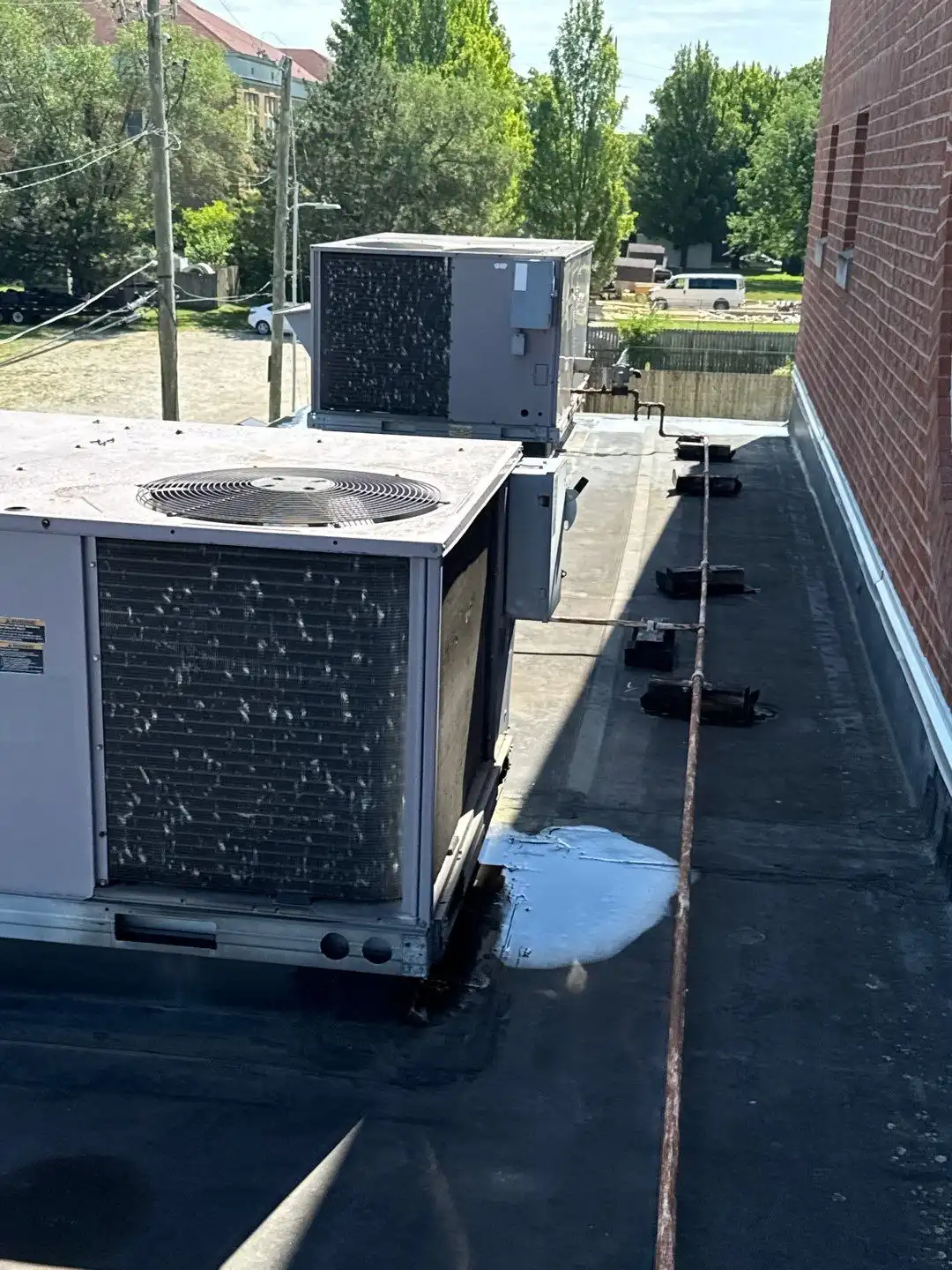
- Mechanical and HVAC curbs. Sealant condition, fastener pull, condensate routing.
- Interior ceiling spot check. Stains, sagging tile, rust on bar joists, insulation tells.
- Written report with photos. Findings, severity ranking, and what is optional versus urgent.
You get a copy. Your insurance adjuster can use it. Your next contractor can quote from it. No obligation to hire us.
Why Skipping Inspections Costs More Than the Roof
Most property owners think the roof is the expensive part. The roof is rarely the largest line item after a failure.
- Damaged inventory and stock loss
- Business interruption and lost revenue days
- Tenant lease disputes and rent abatement
- Mold remediation in suspended ceilings and walls
- Electrical panel and IT equipment replacement
- Higher insurance premiums after a claim
- Deductible stacking across separate covered events
- Forensic engineering fees if cause of loss is disputed
A 30 minute walk catches the problem when it costs a tube of sealant. Wait, and you are paying for commercial water damage restoration and a new roof at the same time.
How to Prepare Your Building for the Walk
You do not need to do much, but a few small steps speed the visit and improve the report.
- Gather any prior roof reports, warranty docs, and invoices
- Mark interior leak locations with tape or a sticky note
- Unlock the roof hatch or have keys at the front desk
- Pull up tenant complaint logs from the last 12 months
- Note any recent rooftop work by HVAC, plumbing, or low voltage trades
- Identify the property manager contact for follow up questions
Most of this takes 15 minutes. It saves an hour on the back end and tightens the written report.
What This Inspection Does Not Cover
Honesty matters. A free assessment is a visual and limited probe walk. It does not include:
- Infrared moisture scans of the insulation layer
- Core samples through the membrane
- Engineered load calculations
- Full warranty transfer paperwork
- Asbestos or hazardous material testing on older built up systems
- Drone thermal imaging or aerial photogrammetry
Those services exist, they are valuable, and we will tell you when you need them. For most Merrillville buildings, the free walk catches 90 percent of what matters.
How Merrillville Commercial Roofing Documents Findings
The deliverable is what makes a free walk useful months later. Every Merrillville Commercial Roofing report includes:
- Date stamped photos keyed to a roof plan
- GPS-tagged location notes for each defect
- A one page summary your CFO can read in two minutes
- Recommended repair scope with material specifications
- Estimated remaining service life by roof section
- A copy formatted for insurance adjuster review
Keep the file. Send it to your broker at renewal. It often supports better premium negotiations.
What the Inspector Looks For on the Roof
Up top, the checklist gets more specific by roof type.
TPO and PVC membranes:
- Seam separation or fishmouths
- Punctures from foot traffic or hail
- Shrinkage pulling away from curbs
- Discoloration around HVAC condensate drips
- Plasticizer migration leaving the surface chalky
EPDM rubber roofs:
- Shrinkage at perimeters and penetrations
- Splits along seam tape lines
- Pooling that has stained the membrane permanently
- Dried out lap sealant
- Loose ballast exposing the membrane to UV
Modified bitumen and built up:
- Blistering and alligatoring
- Granule loss exposing the asphalt
- Open laps and bare cap sheet
- Soft spots indicating saturated insulation below
Metal roofs:
- Loose or backed out fasteners
- Failed butyl tape at panel laps
- Rust at cut edges, valleys, and pipe penetrations
- Oil canning that hides standing water
- Failed pipe boot collars and ridge cap sealant
Warning Signs You Can See From the Ground
You do not need a ladder to know something is wrong. Walk the perimeter of your Merrillville property and look for:
- Dark streaks running down exterior walls below the parapet
- Rust stains around roof drains and scuppers
- Sagging gutters or downspouts pulled away from the wall
- Granules from cap sheet collecting at downspout outlets
- Ceiling tiles inside that look bowed, stained, or replaced in patches
- A musty smell near interior walls after rain
- Bubbling paint on the top of interior walls
- Daylight visible at parapet to wall transitions
- White efflorescence on brick or block below the roofline
- Birds or pests nesting at scupper openings
Any two of these together, schedule the walk this week.
When to Schedule Your Free Walk
Timing matters. The best windows are:
- Early spring after winter freeze thaw cycles
- Late fall before snow and ice loading
- After any hail event larger than a quarter
- Within 48 hours of a major wind storm
- Before lease renewals or building sale due diligence
- Anytime a tenant reports a stain or drip
- Before scheduled HVAC replacement or solar install
- When a roof warranty is approaching its midpoint
If you have an active leak, do not wait for a scheduled inspection. Call for an emergency walk and a temporary dry in. For active leaks, our team prioritizes tarping over paperwork, then comes back for the full assessment. Severity is sorted on the phone so the right truck and materials show up.
Questions to Ask Any Inspector
- How long have you worked on this membrane type?
- Will I get photos with the report?
- Are you the same crew that would do the repair?
- What is urgent versus optional?
- If you cannot help, will you tell me directly?
- Do you carry manufacturer certifications for this system?
If the answer to the last one is anything other than yes, find a different inspector.
What Happens After the Inspection
You get a clear report. We sort findings into three buckets.
- Urgent. Active water entry or imminent failure. Needs work now.
- Planned. Conditions that will fail within one to three years. Budget for it.
- Monitor. Cosmetic or early stage issues. Watch and reinspect.
From there, your options are clear. Repair specific items, schedule a commercial roof inspection follow up next season, consider coating, or plan a full replacement. We will walk you through the math on restoration versus replacement so you can compare a coating against tear off pricing without guesswork.